
Overhead vs. Underground Power Distribution
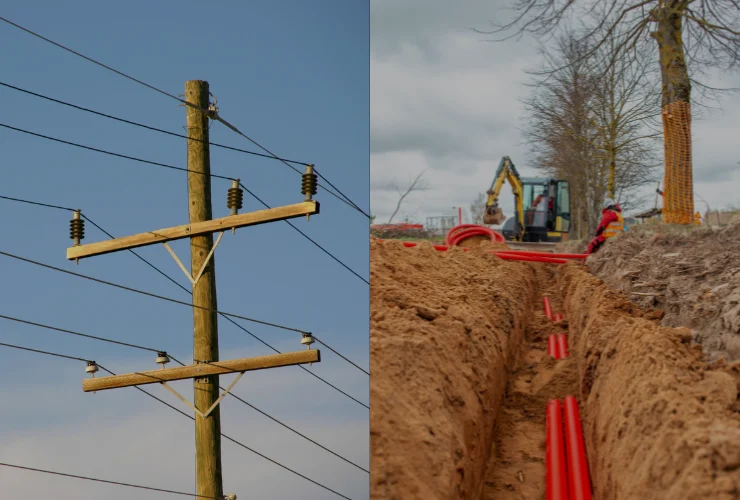
What’s the Difference and Why It Matters for Designers
When it comes to power distribution design, one of the most foundational decisions is whether a system should be overhead (OH) or underground (UG). Understanding the differences in these two approaches helps utilities, developers, and engineers make informed infrastructure decisions.
In this post, we break down:
- What differentiates overhead and underground distribution systems
- Why utilities choose one over the other
- What each option means for distribution designers

Overhead Distribution Design
What It Is
Overhead distribution systems use poles, crossarms, insulators, conductors, and associated equipment installed above ground—most often along roadways, alleys, or easements.
Key Characteristics
- Lower initial construction cost
- Easier access for inspection and maintenance
- Faster fault location and restoration
- Greater exposure to weather, vegetation, and public contact
Design Considerations
From a design perspective, overhead systems require careful attention to:
- Pole class, height, and loading calculations
- Conductor sag and tension analysis
- Clearance compliance (NESC, roadways, structures)
- Joint-use coordination (Communications, CATV).
- Easement and right-of-way validation
Because overhead infrastructure is visible and accessible, field verification and constructability reviews play a major role in design accuracy.
When Overhead Is Typically Chosen
- Rural and suburban environments
- Long feeder runs where cost efficiency is critical
- Areas with easier access to rights-of-way
- Locations where rapid storm restoration is a priority
Underground Distribution Design
What It Is
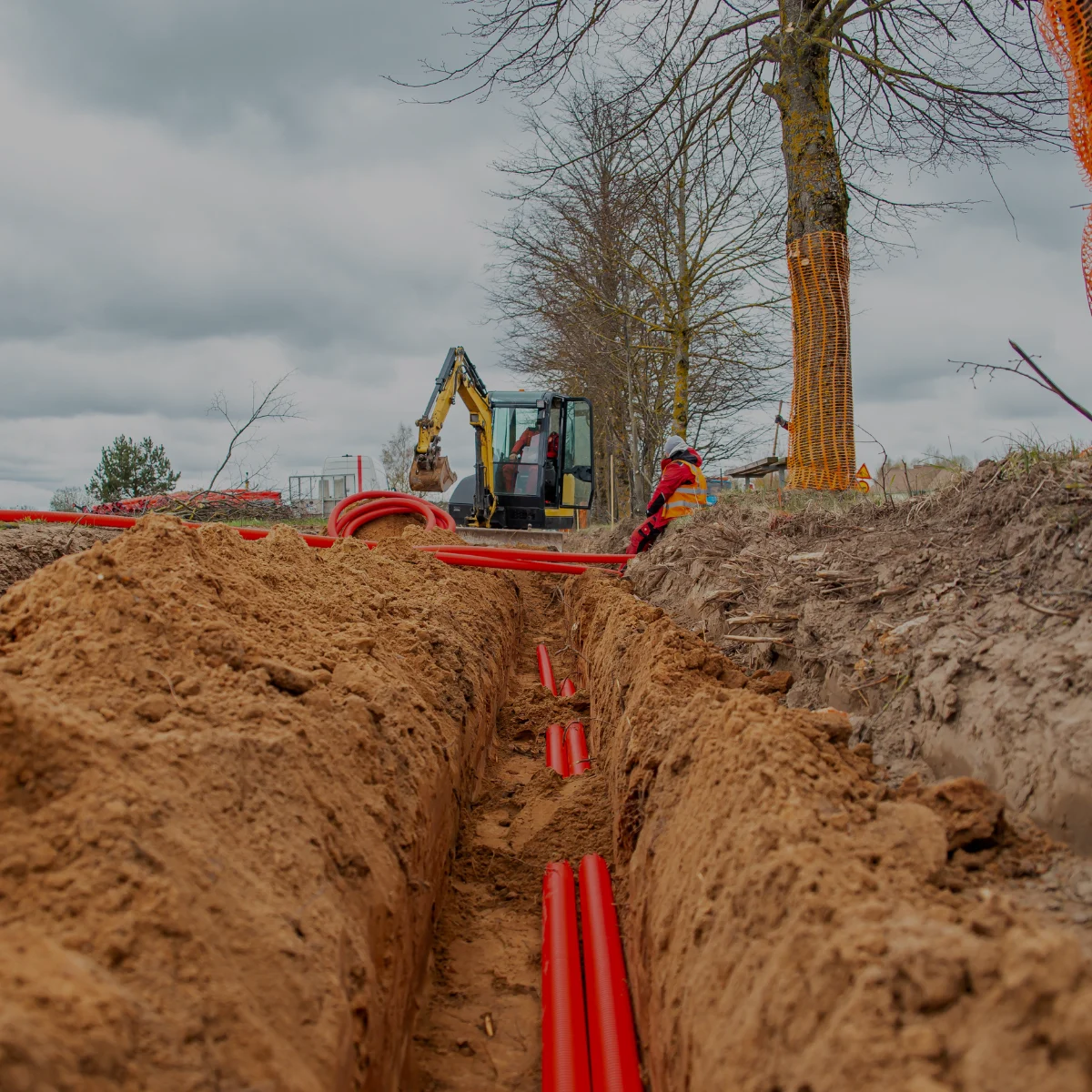
Underground distribution places primary and secondary conductors below grade using conduit, direct-buried cable, vaults, handholes, pad-mounted equipment, and transformers.
Key Characteristics
- Higher upfront construction cost
- Reduced exposure to weather and vegetation
- Improved aesthetics and reduced visual clutter
- More complex fault location and repair processes
Design Considerations
Underground systems introduce a different set of design challenges, including:
- Trench routing and underground congestion analysis
- Coordination and conflict resolution with other utilities
- Thermal limitations and soil conditions
- Cable pulling tensions and bend radius constraints
- Grounding, bonding, and fault current management
- Pad-mounted equipment placement and clearance requirements
Unlike overhead systems, underground designs rely heavily on accurate records, detailed plans, and complete as-built documentation to support future maintenance and restoration.
When Underground Is Typically Chosen
- Urban and densely populated areas
- New residential or commercial developments
- Areas with zoning or aesthetic requirements
- Locations experiencing frequent overhead outages due to weather or vegetation
Overhead vs Underground: A High-Level Comparison
| Consideration | Overhead | Underground |
| Initial Cost | Lower | Higher |
| Construction Speed | Faster | Slower |
| Reliability (Weather) | Lower | Higher |
| Fault Location | Visual | Test & trace |
| Restoration Time | Shorter | Longer |
| Storm Exposure | High | Low |
| Maintenance | Ongoing | Lower routine, higher repair |
| Public Safety | Visible hazards | Reduced exposure |
| Aesthetics | Visible infrastructure | Clean appearance |
What This Means for Designers
For distribution designers, the choice between overhead and underground is more than a material or installation method—it’s a mindset shift.
Overhead Designers Must Focus On:
- Structural integrity and loading
- Clearance and code compliance
- Constructability and access
- Field verification and visual inspections
Underground Designers Must Focus On:
- Subsurface risk and unknowns
- Cross-utility coordination
- Long-term maintainability
- Accurate mapping and as-built documentation
In both cases, design accuracy directly impacts safety, reliability, and total lifecycle cost. A missed clearance overhead, or an overlooked utility conflict underground, can create significant downstream consequences.
The Bottom Line
There is no universal “better” option between overhead and underground distribution—only the right solution for the right environment.
Strong distribution designers understand both systems, respect their differences, and design with long-term performance in mind. As utilities continue to modernize and harden their grids, the ability to thoughtfully evaluate and design both overhead and underground systems remains a critical skill across the power distribution industry.
At DTECH and beyond, these conversations matter—because building resillient grids start with smart distribution design decisions today.
How Sigma Technologies Supports Distribution Design
At Sigma Technologies, distribution design is at the core of what we do. Our teams bring deep experience in pole loading analysis, joint-use coordination, clearance compliance, and constructable, field-verified solutions.
We help utilities evaluate when overhead, underground, or a hybrid solution makes the most sense based on cost, reliability, access, and long-term performance. Whether supporting rural overhead expansions, system hardening efforts, or selective underground deployments, Sigma’s designers focus safety and getting the job done right, on time, and on budget.
At the end of the day, good distribution design isn’t about choosing one method over another—it’s about delivering the right solution for our partners, their environments, and the future.
Reach out to discuss how we can help you drive your next power distribution infrastructure project forward! To set up time with us, reach out to Mike.Yates@teamsigma.com.