
Three Constructability Risks BEAD Awardees Should Address Early
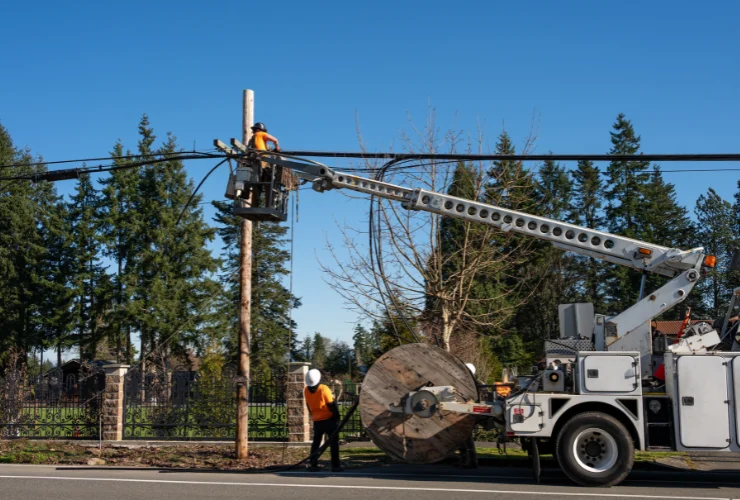
At Calix ConneXions 2026, I joined a panel about one of the next major challenges for BEAD awardees: moving from funding and agreements into broadband construction.
Fiber providers are looking after the financial assurance, compliance, reporting and all the other program requirements as well as getting the awarded projects ready for deployment. From an engineering point of view there’s another key consideration:
A BEAD award defines the opportunity, but it’s the field conditions that will ultimately determine what it actually takes to build.
The earlier that providers understand those conditions the more options they have to control cost and schedule.
Here are three constructability risks worth looking at early on.
Risk #1: Award assumptions still need to be validated in the field.
Broadband projects are all planned on the basis of assumptions regarding route mileage, pole condition, aerial versus underground, make ready, access, crossings and cost. Field validation clarifies those assumptions.
A proposed aerial route may end up needing more make-ready or pole replacement than how it was originally envisioned. A rail or road crossing may add to the requirements. A section originally planned for aerial may, in the end, require an underground solution. Any of those discoveries can have an impact on project cost, schedule and design.
What providers should do: Validate routes and collect reliable field data before assumptions become deeply embedded in final design and construction planning. Confirm pole conditions, make-ready requirements, access constraints, crossings, and the practicality of the proposed construction approach.
Early field validation is a form of cost control. The sooner a project team understands actual conditions, the more options it has to adjust.
Risk #2: Permitting and approvals become a critical path.
Permitting strategy should begin while the route and design are being developed, not after engineering is complete.
Rights-of-way, easements, pole attachments, joint-use requirements, environmental reviews, railroad crossings, roadway permits, and local approvals can all influence the route and determine when construction can begin. A late route change can therefore result in more than just a design change. It can impact permitting, make ready, approvals, cost and schedule.
What providers should do: Identify lead approvals and access requirements early on, work out which of those are going to be the schedule-controlling ones, and incorporate them into the project plan from day one.
Engineering and permitting should move together so the route being designed can realistically be approved and constructed.
Risk #3: Problems are discovered after options have narrowed.
There will likely never be a broadband deployment that eliminates every unknown. The real issue is what happens when the unknowns are found. A pole issue identified during fielding gives the project team options. The route can be adjusted, make-ready can be planned, or the construction approach can change.
If you find that issue after design is complete, permits are in place, materials are committed or contractors are already on site, then it can become a significantly more costly and time-consuming issue.
What providers should do: Use field validation, engineering reviews, and strong QA/QC to identify major constraints while you still have flexibility to respond.
The objective is not to eliminate every risk, but to find any major problems while there are still options to solve them.
Moving From BEAD Award to Construction Readiness
Getting the award can be a big milestone. The next challenge is ensuring the project behind it is ready to build.
That means having a good understanding of the route, the existing infrastructure, the make-ready requirements, the permitting dependencies, and the field conditions right from the outset so that you can make the right decisions before you even start to build.
At Sigma Technologies, we help broadband providers move projects toward construction through OSP network design, field data collection, joint use and make-ready engineering, permitting, and right-of-way support.
BEAD funding creates the opportunity. Good engineering helps providers protect cost and schedule while turning that opportunity into a buildable network.
By ADAM OUSLEY, COO
Adam Ousley serves as one of Sigma Technologies’ Chief Operating Officers, guiding operations in both power and telecom. With a 25-year background in telecom, he applies his expertise to help Sigma deliver FTTx projects that combine efficiency and excellence.