
Beyond BEAD: What Will It Take To Connect the Remaining Unserved
From Large Deployments to Smaller, More Complex Projects
As BEAD moves into implementation, some locations will remain unserved. Coverage maps continue to evolve, providers are expanding networks and eligibility requirements have shifted. In addition, some locations were excluded because they were tied to other federal funding commitments, even when those commitments later changed.
Regardless of the reason, the next challenge is understanding what it will take to connect these remaining locations. As states begin addressing these gaps, attention is shifting from large-scale deployments to smaller, more targeted projects with different risks and cost considerations.
States Are Exploring Different Approaches
There is unlikely to be a single replacement for BEAD. Instead, states are developing targeted programs based on the needs of their remaining unserved communities.
Some programs focus on direct gap funding. Wisconsin, for example, has committed state funding toward locations expected to remain unserved. Other states are evaluating how to continue supporting communities that fall outside BEAD eligibility requirements.
In other cases, states are addressing infrastructure costs that can derail deployment projects. Virginia has authorized funding to help offset expenses such as pole replacements, railroad crossings and other construction-related challenges.
Programs like West Virginia’s LEAD initiative take a different approach by supporting line extensions that expand existing networks into smaller pockets of unserved locations.
While these programs vary in structure and funding priorities, they point to a broader trend: broadband expansion beyond BEAD is becoming more targeted and project-specific.
Identifying Risks Before Construction
Large broadband deployments often benefit from repeatable network designs, permitting processes and construction methods. Engineering costs can also be spread across a larger number of passings.
Smaller deployments present a different set of challenges. Longer network extensions, fewer passings and unique route conditions leave less room for unexpected costs. Existing infrastructure and local requirements can introduce additional uncertainty, including make-ready work, pole replacements, easements, permitting, rights-of-way and difficult roadway or railroad crossings.
When these issues are identified late, providers can face redesigns, delays and increased construction costs. For smaller projects, a single infrastructure constraint can significantly affect overall feasibility.
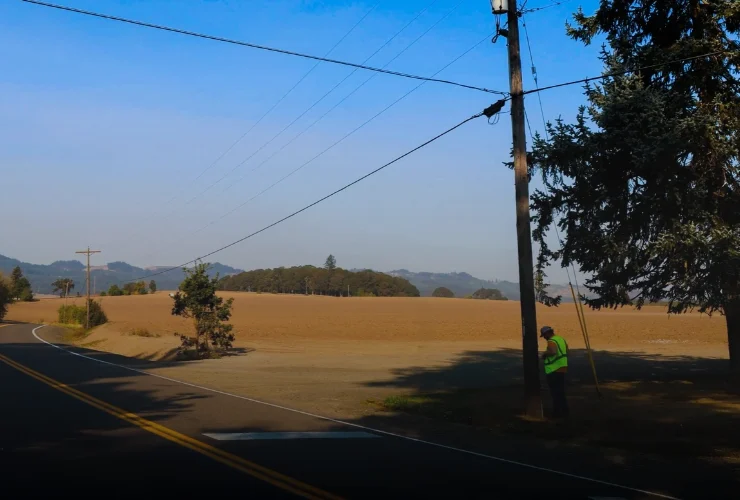
Field validation and project-specific engineering help identify these challenges before construction begins. Understanding existing infrastructure, validating route conditions and evaluating permitting requirements early allows providers to make more informed decisions about project scope, cost and schedule.
Preparing for the Next Phase of Broadband Expansion
As broadband deployment becomes more targeted, engineering and constructability will play a larger role in managing project risk. Some areas will support standardized approaches, while others will require solutions tailored to specific route conditions.
For providers working to connect the remaining unserved locations, identifying challenges early can help turn funding opportunities into realistic, buildable projects.
The more challenging the location, the more important it becomes to understand the risks before construction begins.

By ADAM OUSLEY, COO
Adam Ousley serves as one of Sigma Technologies’ Chief Operating Officers, guiding operations in both power and telecom. With a 25-year background in telecom, he applies his expertise to help Sigma deliver FTTx projects that combine efficiency and excellence.